Your Chest. Your Breath. Your Next Step.
A thoracic surgeon who explains everything first and operates only when it's right. Specializing in lung, esophageal, and chest wall conditions — with the calm certainty that comes from 20 years and 3,400+ procedures.
What Are You
Facing Right Now?
Each condition below starts with the fear — because that's where you are — then moves through the surgical approach and into life after treatment.
Lung Nodules & Lung Cancer
"You were told something showed up on your scan."
A pulmonary nodule on your CT is not a death sentence — most are benign. But when biopsy or growth pattern indicates malignancy, early surgical resection is the single most effective treatment. We use video-assisted thoracoscopic surgery (VATS) to remove the affected lobe through 3 small incisions, not an open chest.
Procedure
VATS Lobectomy / Segmentectomy
Recovery
2–4 days hospital stay. Most patients return to normal activity in 3–4 weeks.
Outcomes
86% of eligible patients treated surgically. 5-year survival rates improve significantly with stage I/II resection.
86% of eligible patients treated surgically.
Discuss Your CasePleural Effusion
"You can't take a full breath. Your chest feels heavy and wrong."
Fluid accumulating between the lung and chest wall compresses your lung from outside. The breathlessness is real and frightening. We drain the fluid, identify whether it's malignant or reactive, and — when appropriate — place an indwelling pleural catheter so you can manage drainage at home, preserving your quality of life without repeated hospital visits.
Procedure
Thoracocentesis · Chemical Pleurodesis · Indwelling Catheter
Recovery
Same-day or overnight procedure in most cases. Catheter patients manage at home.
Symptom relief in 95%+ of patients.
Discuss Your CaseEsophageal Disease
"Swallowing has become painful. Food sticks. Your GI doctor wants a second opinion."
Esophageal cancer, GERD refractory to medication, and achalasia all require surgical expertise that sits at the intersection of thoracic and upper GI surgery. Esophagectomy — removal and reconstruction of the esophagus — is one of the most technically demanding procedures in thoracic surgery. We perform it minimally invasively when anatomy allows, with reconstructive technique refined over 800+ esophageal cases.
Procedure
Minimally Invasive Esophagectomy · Heller Myotomy · Anti-reflux Surgery
Recovery
5–7 days hospital stay for esophagectomy. Dietary progression over 6–8 weeks.
Esophagectomy represents 18.
Discuss Your CaseChest Wall & Mediastinal Conditions
"You were in an accident. Your chest doesn't look right. Breathing hurts with every movement."
Traumatic chest injuries, pectus deformities, and mediastinal tumors — including thymomas that sit directly behind your sternum — require surgical approaches that protect the heart and major vessels while achieving complete resection or structural repair. Thymectomy accounts for 15% of our procedures; mediastinal tumors another 11.5%.
Procedure
Chest Wall Reconstruction · Thymectomy · Mediastinal Tumor Resection
Recovery
Variable by procedure. Chest wall reconstruction: 3–5 days. Thymectomy: 1–2 days via VATS.
Complete resection achieved in 94% of thymomas.
Discuss Your CaseMinimally Invasive.
Maximally Precise.
Video-Assisted Thoracoscopic Surgery (VATS) has transformed thoracic care over the past two decades. Here's what that means for you, in plain terms.
VATS vs. Open Thoracotomy
Increasingly replacing open thoracotomy
VATS is now standard of care for lung resection, pleural procedures, and esophageal surgery in suitable candidates.
Your Recovery — Week by Week
Breathing exercises begin. Most patients sit up within hours.
Once drainage clears, tubes come out. Walking in the hall.
Incentive spirometry kit. Follow-up scheduled for 2 weeks.
Driving. Short walks. Most desk work resumes.
CT scan confirms lung re-expansion. Pathology reviewed together.
Post-op support is built in. Our care team includes dedicated thoracic ICU nurses, respiratory therapists, and a 24-hour nursing line. You will not navigate recovery alone.
The Surgeon
Behind the Procedure
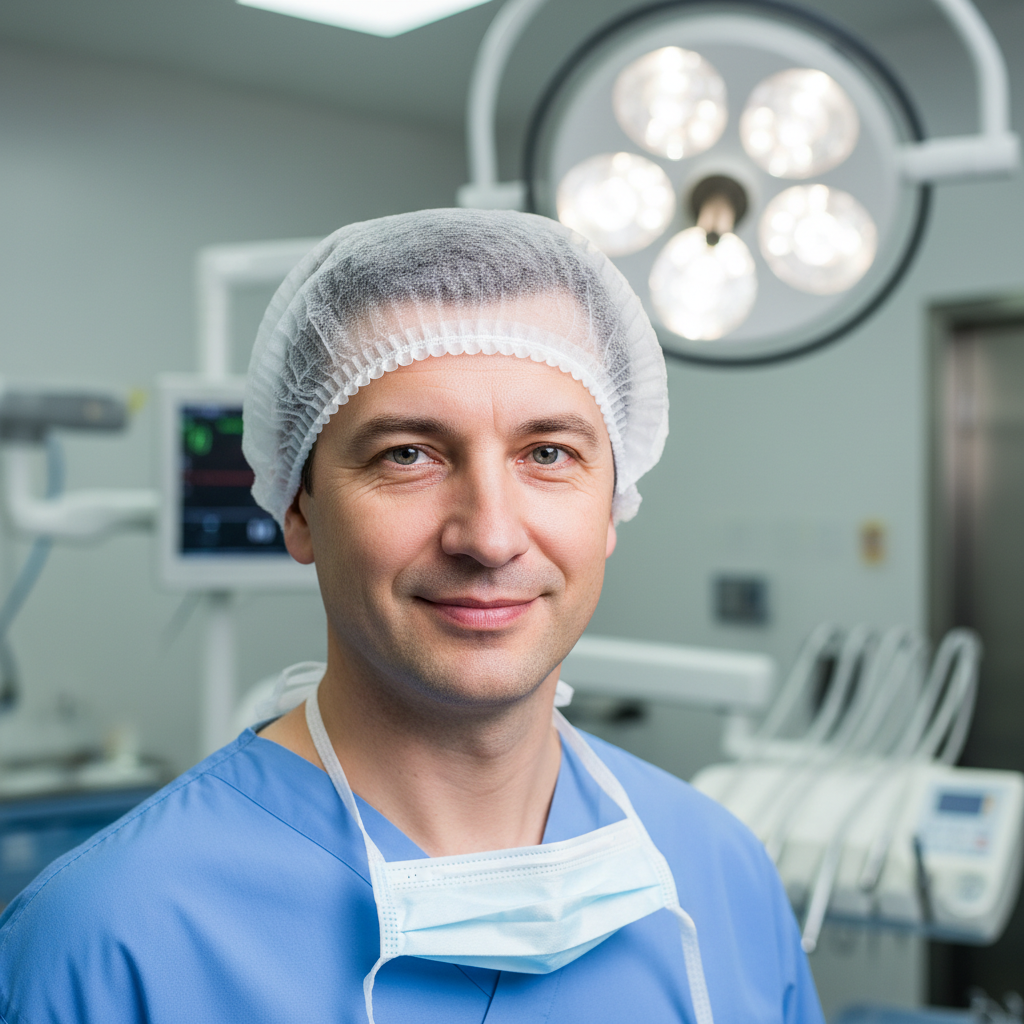
Dr. James Reeves, MD, FACS
Director of Thoracic Surgery · New York Thoracic Institute
Fellowship Training
Memorial Sloan Kettering Cancer Center
Thoracic Oncology · 2006–2008
Board Certification
American Board of Thoracic Surgery
Continuously certified since 2009
STS Database
Society of Thoracic Surgeons
Participant since 2010 · Outcomes audited annually
Published Research
34 Peer-Reviewed Publications
Journal of Thoracic Surgery, Annals of Surgery
Surgical Volume — Outcomes at Scale
3,400+
Total Procedures
Since 2004
800+
Esophagectomies
Among highest volume in NY
<1%
Mortality Rate
Below national average
94%
Complete Resection
For thymomas and mediastinal tumors
"I came in with a CT report I barely understood and a fear I couldn't name. Dr. Reeves sat down, drew a diagram, and explained exactly what we were looking at — and exactly what we were going to do. That was the first time I exhaled in three weeks."
Margaret Calloway
Lung nodule resection patient · Staten Island, NY
"As a pulmonologist, I refer complex cases to Dr. Reeves because I know he will tell my patient the truth — including when surgery is not the right answer. That clinical honesty is rare and it's exactly what my patients need."
Dr. Priya Subramaniam
Pulmonologist · NYU Langone Medical Center

Send Your Patient's
Records Directly.
Secure, HIPAA-compliant imaging and note upload. We review within 24 business hours and call you directly — not your patient — with our surgical assessment. You remain the quarterback of your patient's care.
24h
Record Review Turnaround
100%
Direct Surgeon Callback
HIPAA
Compliant Upload Portal
MDT
Multidisciplinary Tumor Board
The Exhale Starts Here.
No referral required to book. Insurance verification happens after — not before — you find a time that works. The form takes under 3 minutes.
Referring a patient? Use the physician portal to send imaging directly.